At the Templeton Community Library, a little-known but powerful program is making reading possible for people who can’t hold a book from stroke survivors and veterans with traumatic brain injuries (TBI), to people with low vision or learning differences.
Reading would not have been anything that I would be able to do, said Steve Tollesfson, who is visually impaired.
Tollefson became partially blind after suffering from a stroke in his eye in 2010 and again in his other eye in 2014. He is only able to see from the top quadrants of his eyes, making reading a book something he took for granted before his impairment now nearly impossible.
Being a former professional and stunt driver, no longer being able to enjoy the simple task of reading drove him to want to even more. Thats how he learned from the Santa Barbara Braille Institute about the services the National Library Service for the Blind and Print Disabled offers.
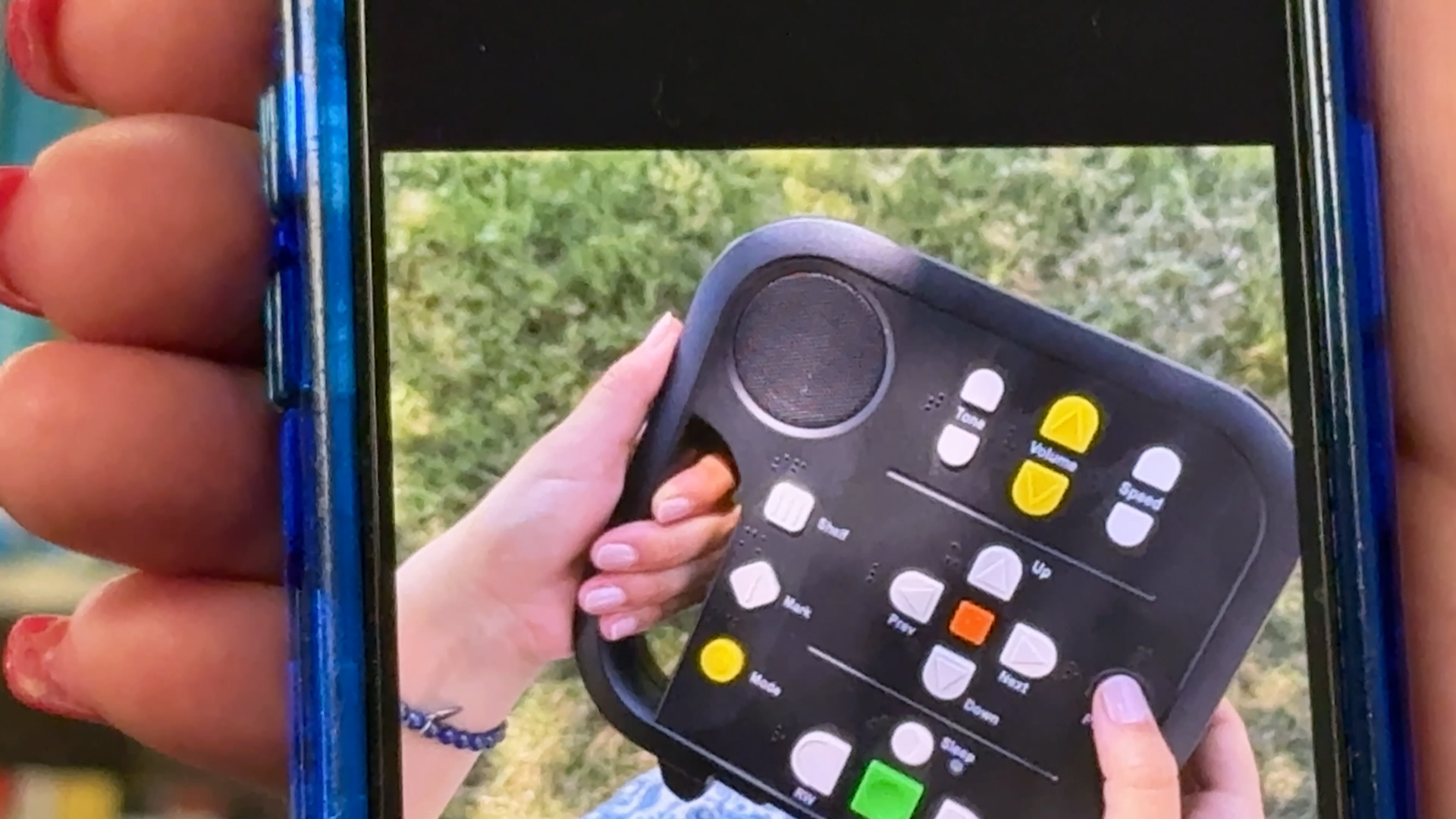
They said, Okay, well heres the thing to be able to read a book. It looked like an old cassette recorder, and its tactile, so you can physically feel the buttons, and you can learn that very easily, Tollefson said. Thats when I started.
The Braille Institute equipped Tollefson with a digital talking-book player. Hes now graduated to the Braille and Audio Reading Download (BARD) app, which he can use to download thousands of materials digitally right on his phone.
Since then, a whole new world opened for Tollefson.
I probably read two/three books by the time I got out of high school, luckily [I] made it out, but I think in those 12 years, I think Ive read close to 1,700 books, he said.
Thanks to the Templeton Library and the Braille Institute that works with NLS, that service and many others that could change the lives of people who cant read a traditional book are available to the community for free.
Audiobooks and digital audio readers to people that have, not only vision loss, but physical disabilities, Templeton Community Library Association President Melinda Reed said. If they cant hold a book, if theyve had a stroke, maybe an accident, veterans there are people that have learning disabilities that all qualify for free digital materials.
Heres how it works: those who are blind, have visual impairment or are unable to read standard print, or have physical limitations or reading disabilities can now fill out the application at the Templeton Library to qualify for services.
The applications to use their free services can be signed by a doctor, a teacher or a librarian, Reed said. Templeton Library has their own applications to apply for those services, so were excited about that opportunity to provide those services to patrons in all of San Luis Obispo County that might have those needs.
Tellefson will be speaking at an informational meeting for disabled and low vision patrons at the Library
on Sept. 1 at 5 p.m.