
On his Sunday away from work as an eye surgeon, Dr. Huck Holz had planned an exciting backcountry ski trip in February 2025.
He and a friend decided to hike the massive, snow-filled peak of Mount Shasta in Northern California, but as they trudged toward the summit, the adventure took an unsettling turn with a phone call from the CDC that literally stopped him in his tracks.
I, luckily, had cell phone reception, he said. It was one of those calls that you never forget.
They told me that I potentially had a patient with rabies, he said.
How deadly is rabies?
Rabies is a fatal, viral neurological disease, associated with wild animals like bats, skunks, raccoons, and foxes.
It may take weeks or months to incubate in the human body after a bite or a scratch, but a series of post-exposure vaccines can prevent the virus from developing.
According to the CDC, more than 100,000 people receive these shots to prevent the disease each year, and fewer than 10 people die annually from rabies in the United States.
However, once symptoms begin, the disease is nearly always fatal.
RELATED STORY | Organ recipient dies after donors rabies infection went undetected
And somehow, Holz’s patient might have been exposed.
The donor connection
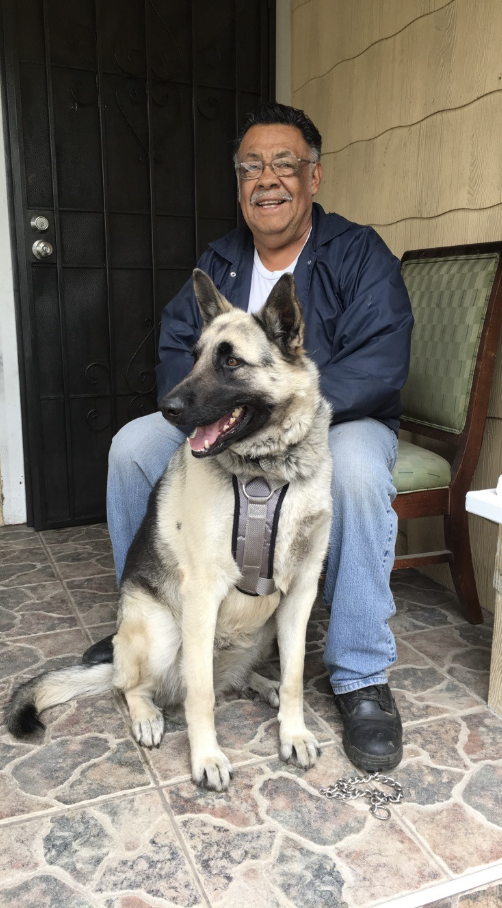
More than a month earlier, Holz had performed a successful cornea procedure on his patient, Inocencio Miramontes, using a tiny piece of tissue from a deceased donor.
The tissue had been screened for safety and provided to him by an eye bank.
Holz said he didnt know much about the tissue donors history beyond a few basic facts that the eye bank provided to him when it distributed the tissue.
RELATED STORY | Boy dies from rabies after waking up with bat on his mouth
I knew that the donor had died of a heart attack, and I knew the donors age and the sex of the donor. I did not know much else, he said.
What no one knew at the time, however, was what actually
killed donor. It wasnt a heart attack. It was rabies. And the donor’s potentially infected cornea tissue had been in Miramontes eye for weeks.
Who was the donor?
James Martin was a father of three grown children who loved animals and writing poems.
He and his wife, Kim, lived in the Idaho Panhandle before he died of what was initially believed to be a heart attack in December 2024
,
and his organs and tissues were donated to people in various states.

More than a month before his death, however, Martin had been scratched by what is now believed to have been a rabid skunk. He was sitting on his front porch when the aggressive animal lunged at Martins rescue kitten.
He said he grabbed (the skunk) by the neck, and he literally, you know, pushed it up against the house, his wife, Kim Martin, said. He said he just gave it a few punches and everything, but in grabbing it, he said he got scratched.
Martin did not seek post-exposure prophylaxis shots as a precaution, and slowly, rabies silently took over his body.
Hes like, Im – Ill be fine. Its just a scratch. Ill just put, you know, Neosporin on it, and Ill be fine after I get it cleaned, his wife said.
Doctors now believe James Martins other extensive medical issues may have masked any rabies symptoms, leading a medical team to believe he had died of a heart attack.
In this case, hospital staff members who treated the donor were initially unaware of the skunk scratch and attributed his pre-admission signs and symptoms to chronic comorbidities, the CDC said in a review of this incident.
According to the CDC, details about Martins encounter with a skunk were documented on a standard donor risk assessment screening form before his organs and tissues were harvested and donated.
But those details were not enough to stop the transplant, and Martin was not tested for the virus.
Some thought that, Well, he just died of a heart attack, and so the other stuff was overlooked. But it can never be overlooked, said Holz.
Why organs and tissues are not tested for rabies
According to the CDC, rabies deaths are extremely rare, and testing for the virus is complicated and time-consuming, unlike testing for more common illnesses like HIV and hepatitis.
Rabies is excluded from routine donor pathogen testing because of its rarity in humans in the United States and the complexity of diagnostic testing, the CDC said in a review of this case.
The demand for organs, meanwhile, is constant.
According to David McCormick, a medical officer in the CDC office of Blood, Organ, and Other Tissue Safety, there are approximately 100,000 people on the waiting list for organs, and about 13 people die each day while they wait.
Given that there is such a need for organs and that timing in organ donation can be very critical, if we had to wait two to three days to test every organ donor for rabies…that could delay people receiving organs that they need, and with just how rare rabies is, it just wouldnt be cost-effective and would likely result in organs not being used when they could have been used and could have saved people, McCormick told Scripps News earlier this year.
How the eye tissue was screened
Lions World Vision Institute, the eye bank that reviewed the donor’s medical records and provided the corneal tissue for transplant, told Scripps News the organization followed guidance from the Food and Drug Administration and standards set by the Eye Bank Association of America when screening the deceased donors tissue for a potential transplant.
The donor regulations at that time did not rule out (transplanting tissue due to animal) scratches, only bites, said Jason Woody, the president and CEO of LWVI, in a written statement.
RELATED STORY | Hundreds of Grand Teton National Park visitors may have been exposed to rabies
At the time, Woody said tissue would have been rejected if a patient was suspected of having rabies or if the person had been bitten by an animal suspected to be infected with rabies within the past six months.
Animal scratches, however, were not part of the guidelines for deferring tissue.
There was no indication at that time that this was a case of rabies, said Kevin Corcoran, the president and CEO of EBAA. They did note that he had been scratched by a skunk, but he had been seen by a number of physicians during the time that he was (in the hospital), and there was no expectation he had contracted rabies.
As a result, the donors corneal tissues were sent out for surgeries in Idaho, Missouri, New Mexico, and California, including the one that Miramontes had planned.
The donor’s kidney, meanwhile, was sent to a Michigan grandfather named Barney Kurowicki.
LifeCenter Northwest is the organ procurement organization that managed the kidney.
LifeCenter Northwest follows screening and testing protocols for donation as per (the Organ Procurement and Transplantation Network) policy, and we provide available donor information to our transplant partners in accordance with national policy requirements set by the OPTN, a spokesperson told Scripps News earlier this year.
How rabies was discovered
More than a month after receiving the kidney transplant, Kurowicki started experiencing strange symptoms including a fear of consuming water.
At first, rabies didnt seem like the logical culprit, but doctors contacted the CDC to be sure.
At the time, only three cases of rabies transmission through an organ transplant had ever been documented in the history of U.S. transplant system, according to the CDC.
But it was happening again.
RELATED STORY | Woman stabs boyfriend’s eye with rabies needle for eyeing other women
By the time doctors and scientists confirmed that Kurowicki had contracted rabies from Martins donated kidney, it was too late to save his life.
There was still time, however, to warn the people who received the donors corneal tissues.
Suddenly, the CDC was on a quest to find Miramontes and three others who had already received or were scheduled for cornea graft surgery with the potentially infected tissue.
Idaho patient learns about rabies threat
Joseph Bird, 25, has suffered from a condition called keratoconus since his diagnosis as a teenager.
His deformed cornea had progressively gotten worse over the years, distorting and diminishing the vision in his left eye.
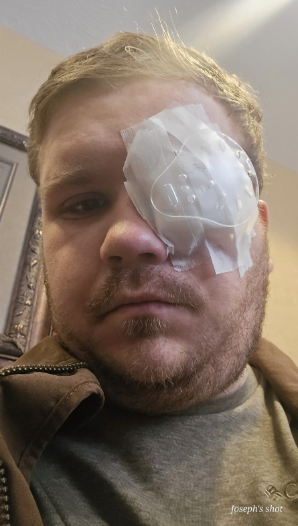
In 2025, he hoped some of his sight could be restored through a special new procedure in which his doctor in Idaho Falls would insert a piece of custom corneal tissue into his eye, provide by a deceased donor.
I was pretty excited, he said.
His doctor said it would take a few days before he would notice results, so Bird remained patient.
It wasnt until about four days after the surgery when my doctor called me, saying that I should sit down, Bird said. He says, The donor had rabies, and I should go to the emergency room to get the rabies (post-exposure prophylaxis) shots and that hes already called them, and theyre all ready for me.
Although rabies is considered a medical urgency rather than an emergency, infectious disease experts urge exposed patients to seek vaccines immediately after being exposed because the virus is deadly once symptoms begin.
Its not something that you get infected and two days later, youre going to develop symptoms, Rebecca Earnest, an epidemic intelligence service officer with the CDC, told Scripps News earlier this year. However, because it’s so fatal, we want people to get rabies (post-exposure prophylaxis shots) as soon as they find out they might have been exposed.
Although the tissue that had been implanted in Birds eye was not live tissue and had been sterilized through gamma irradiation, his surgery also would have to be reversed.
The FDA could not confirm that the gamma irradiation to the tissue would inactivate the virus, said Dr. Bradley Gardner, Birds surgeon. So, therefore we have to go full-court press.
The following day, I would say, is when everything really hit the fan, he said.
Vaccine in or around the eye a new approach
The concern came up if we need to also inject the human rabies immunoglobulin around the eye, said Gardner.
Essentially, because the eye is so close to the brain, would Bird and the other patients need antibodies injected directly in or around the eye to attack the virus if it were present?
This was something that had never been done before, Gardner said.
Its not like the first time that weve injected medications behind the eye and around the eye, but its never been done before with human rabies immunoglobulin, he said.
RELATED STORY | Vicious ‘attack squirrel’ sends multiple residents to the hospital in California
Gardner said he participated in a series of urgent phone calls with every expert who might know anything about the potential risks and benefits.
Im sitting here like, Im really going to be the first one to ever do this? he said. So, that was a little intimidating, but having so many experts side with that protocol, we really felt that that was the best way to go.
In California, Dr. Holz was having a similar experience.
What they told me at the CDC is, Weve never done this at all, ever,” he said. We did have an advisory panel from the CDC who gave me some ideas about where to put it and how to put it, and I just followed their instructions. They had no experience with this, and I had no experience with this, so it was a bit of us both stumbling around in the dark trying to find the best outcome for the patient, he said.
The procedure was a success.
The patients outcomes
I was just so nervous, said Miramontes, who received the eye injection and a series of other post-exposure prophylaxis shots.
Miramontes surgery was also reversed, and a new piece of tissue was implanted successfully.
I cannot sleep sometimes, Miramontes said. I feel like, stressed, but at the same time: stressed and nervous. I feel changed, but I cannot say how. Its hard, especially when you get these surprises like that.
The only thing I hated was the needle in the eye, said Bird.
Though both men are now safe from rabies, both say they continue to be affected by anxiety.
Bird said he struggles with the idea of additional surgeries.
My honest opinion on all of it is the saying, What doesnt kill you makes you stronger, he said. This one would be considered kind of half true. It didnt kill me. I dont think it made me stronger, though.
The other patients
The CDC was able to contact the Missouri doctor before his patients eye surgery occurred.
We were able to switch to new tissue from another donor, said Dr. Mujtaba Qazi. The CDC did contact me, but I told them we never received nor used the potentially contaminated tissue.
Scripps News was unable to reach the New Mexico doctor and patient, but according to the CDC, that patient also received post-exposure prophylaxis shots to prevent the virus from developing.
The CDC reported that all the donated eye tissues removed from the patients eyes were tested for rabies, and one tissue came back positive.
Every time we go forward now, this is something, obviously, were thinking about, said Gardner, acknowledging that this set of circumstances was incredibly rare.
When I look back on my career and going through all this I’d say this is definitely one of the most memorable events of my career, he said.
Holz agreed.
This is a once-in-a-career thing if you ever experience this, ever, said Holz. And I expect I will never get a call like this again.
Changes in eye banking after the rabies transmission
The case was really almost a perfect storm of unexpected instances, said Corcoran. This was probably a one in 40 million a one in one hundred million chance.
Following the incident, the Eye Bank Association of America immediately launched an investigation through its medical review subcommittee, Corcoran said.
Once we came to fully understand what had happened, we sent an alert out to all of our eye banks that brought them all the information we had on this and told them that our initial guidance was to change the way they screened for donors, so that if there was ever an incident where a donor had contact with an animal, and it was unclear what the status of that animal was, that donor would be deferred, so we would not recover their tissue. We would not transplant that tissue, he said.
The new policy, established in June 2025, is currently in effect today.
Corcoran said there is a surplus of corneal tissue in the United States, unlike the massive demand for organs.
We are able to be more selective with tissue that we recover, he said. Whereas, on the organ side, because there are shortages, because there are many people that die every day because they cant get organs that they need, theres much more urgency for them.
Proposed changes in organ screening for rabies
In April 2025, the Organ Procurement and Transplantation Network was urged by the Health Resources and Services Administration to develop better protocols to reduce the risk of donor-derived rabies transmission through organ transplants.
A special Disease Transmission Advisory Committee, DTAC, proposed policy changes and new protocols that would enhance organ screening criteria and improve data collection, but no official votes have been made to adopt these policies and protocols.
In a written statement, a spokesperson for HRSA told Scripps News that the issue was being prepared to be voted on by the OPTN board of directors.
The next board meeting is November 19.
Many organ procurement organizations have voluntarily adopted the practices, however, including rabies testing when appropriate to help protect patient safety, a spokesperson said.